-
-
Stuttgart
-
2011
-
Institution
Künstlerhaus Stuttgart
-
Kuratoren
Adnan Yildiz, Michael Birchall, Regina Fasshauer
-
Projektbeteiligte
Martin Blumenroth
-
Bildcredits
Erik Sturm, Prinzmetal

PRINZMETAL
Wie geht‘s dir Stuttgart?
Künstlerhaus Stuttgart 2011
Written by Michael Birchall
Thirty four years ago Stuttgart based artists founded Künstlerhaus Stuttgart as an independent art space. Since then, it has developed into one of the most significant experimental platforms in Germany, especially regarding the conceptual diversity of artistic contributions and curatorial research. In the summer of 2011, the exhibition Wie geht’s dir Stuttgart? curated by Michael Birchall, Regina Fasshauer and Adnan Yildiz opened at Künstlerhaus Stuttgart; it investigated the artistic positions
and statements which develop global perspectives on a local context. As part of this large exhibition kirchentrojaner were commissioned to make a new work, in their case a subversive actionbased “performance” that ran for the duration of the exhibition culminating in a large scale intervention in the area outside the gallery.
Aaron Werbick and Martin Blumenroth hold a specialized position in contemporary architecture, they initiate participatory and relational works in a variety of contexts with diverse audiences including community groups and churches. Their projects put the observer at the forefront by altering their position within their projects to an active participatory role. As architects they position themselves firmly within this discipline - their interventions, alternations and community based work –– changes not only the physical structures that exist between people but also the social boundaries and layers that are in place amongst their collaborators or identified group.
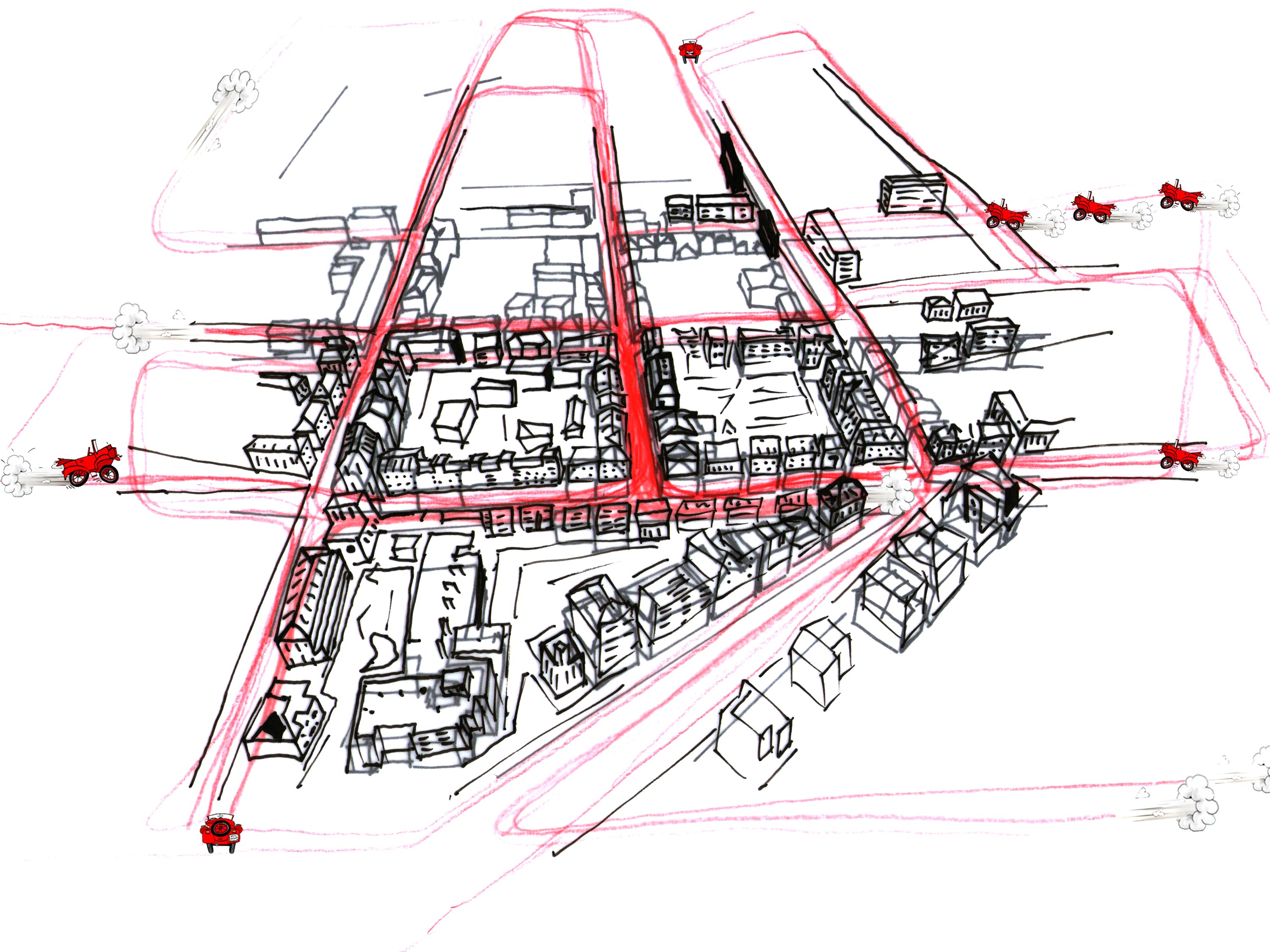
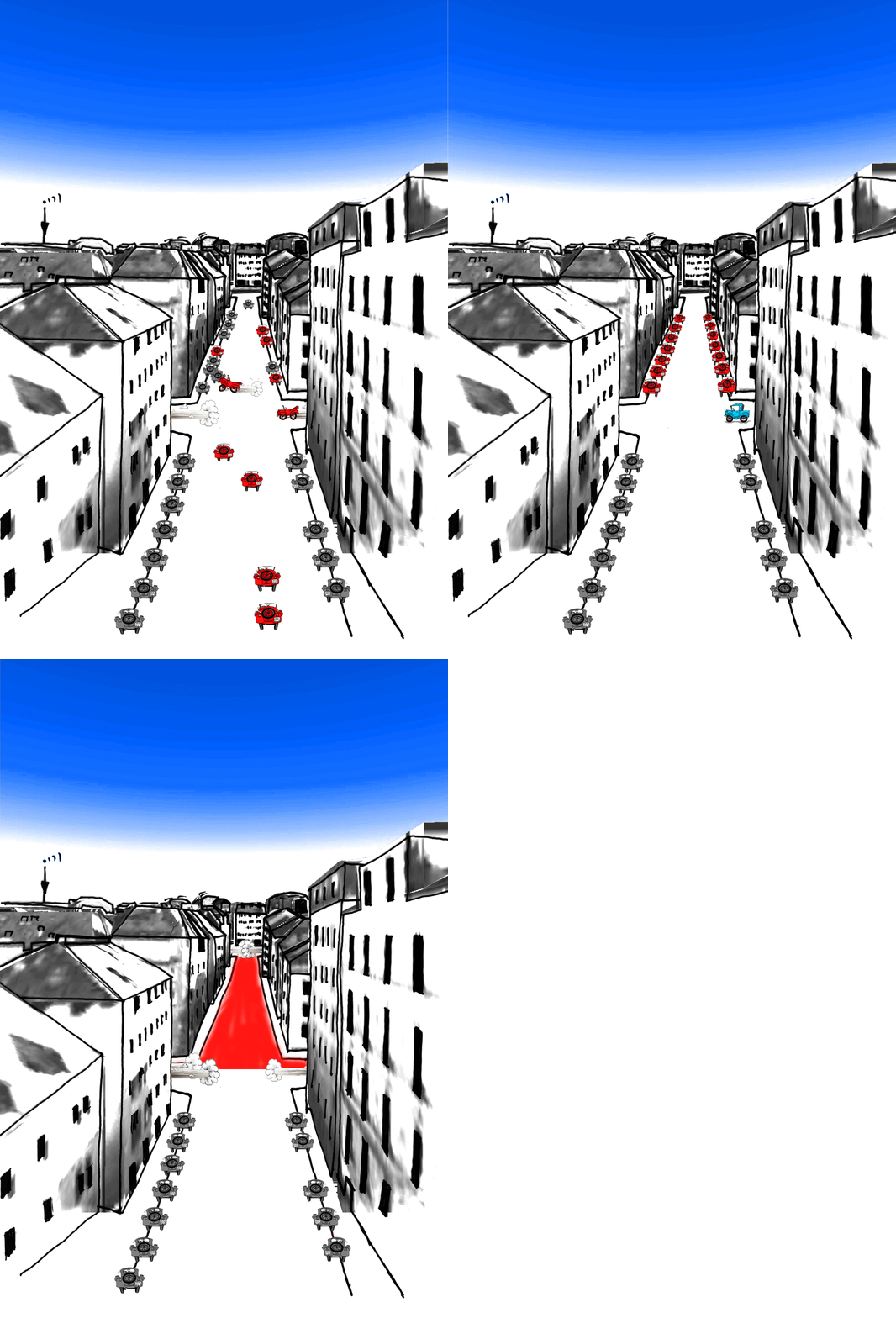
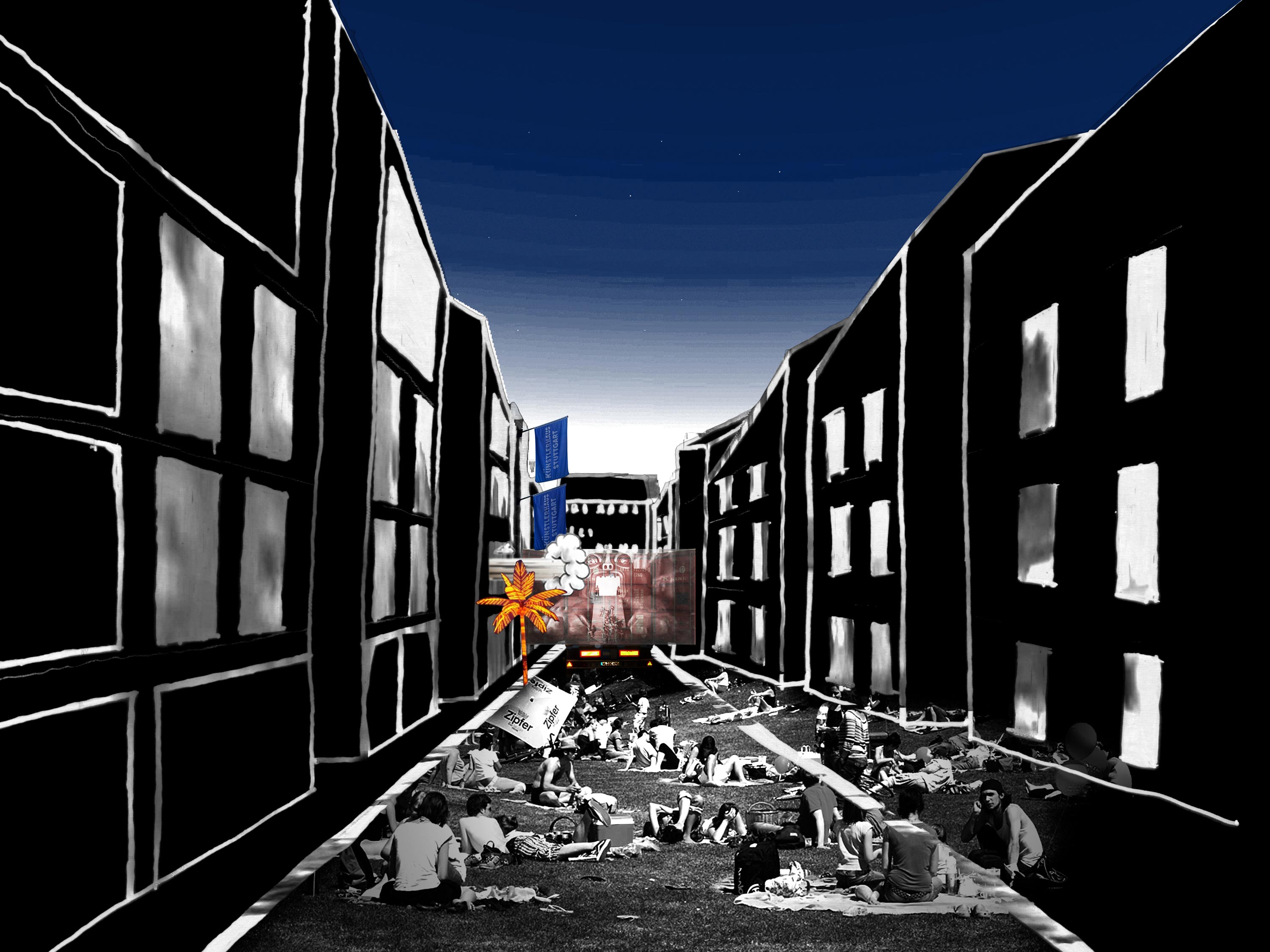
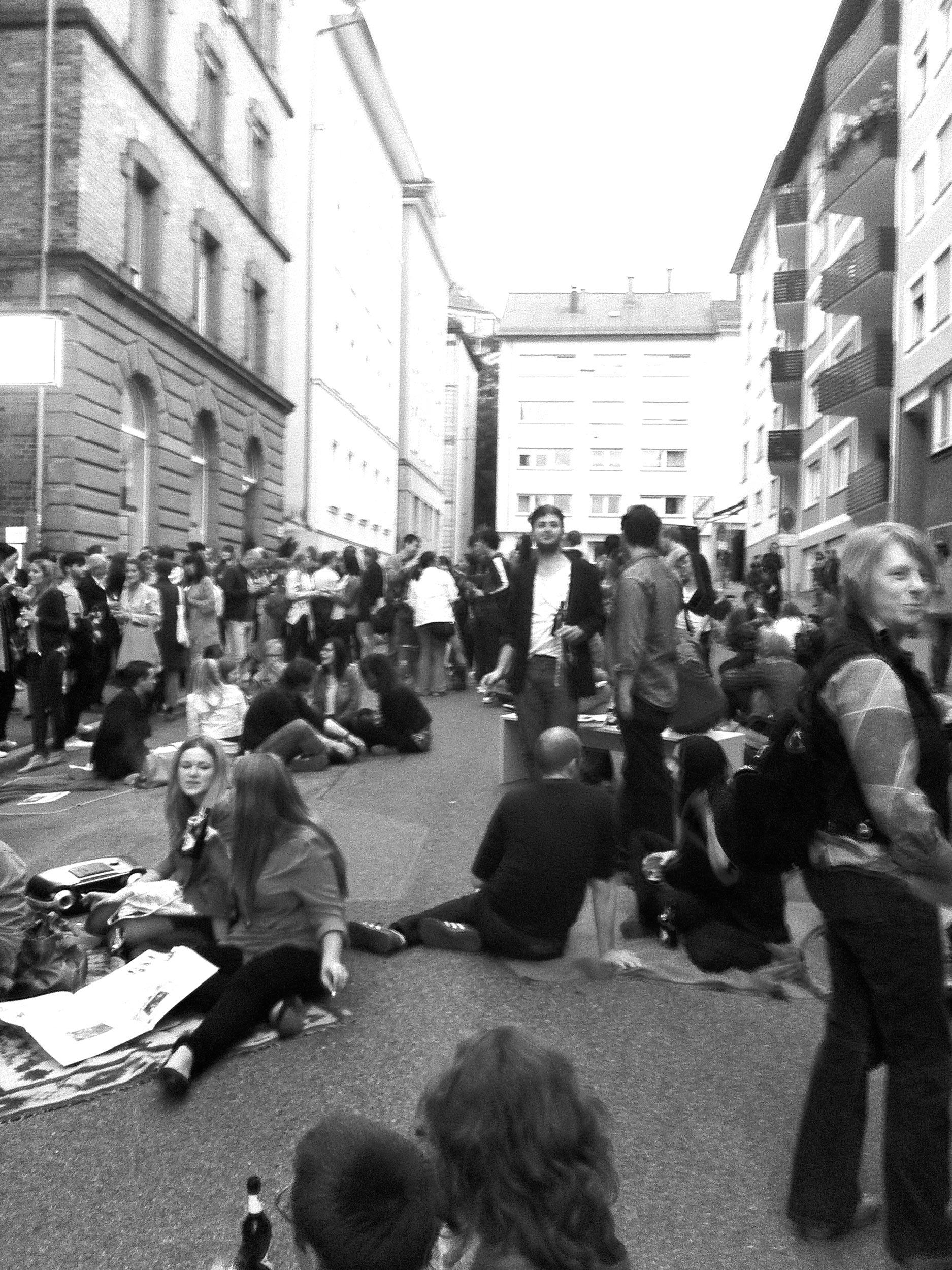
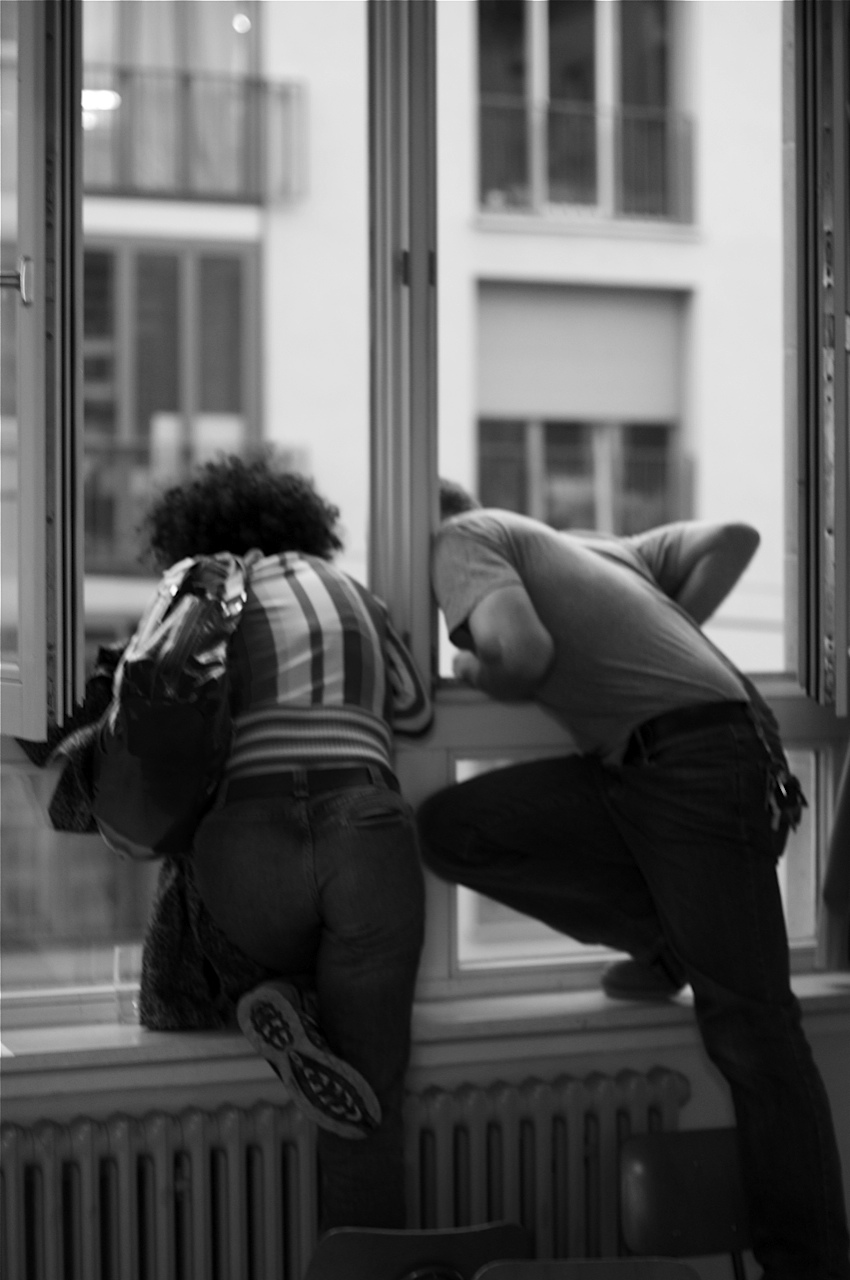
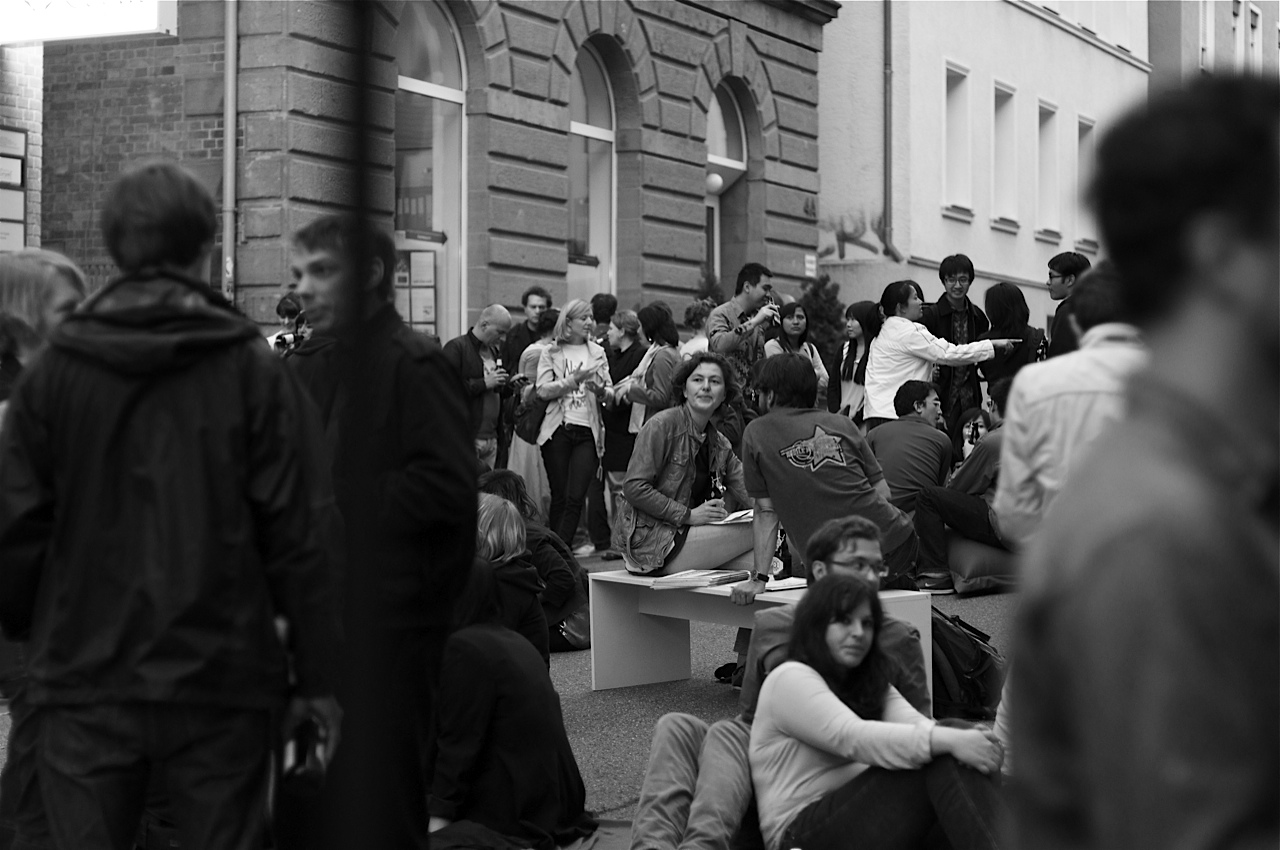
In Wie geht’s dir Stuttgart? the local context was vital for the exhibition to succeed and primarily due to the fact that the local neighborhood never really took much of an interest in the activities going on inside the Künstlerhaus. After discussing this as well as factors relating to the Künstlerhaus and the wider context of the exhibition the group developed their concept for PRINZMETAL, which became a direct response to the surrounding neighborhood and thus connected the house within the context of the wider city. Over the course of the exhibition a process wall was established which contained a proposal of what was to take place on the Reuchlinstraße. The public were invited to be part of this work by parking their cars outside the Künstlerhaus for the duration of the piece. As well as this blankets could be donated to be used as temporary seating to create a “picnic” environment during the performance. The action-performance was critical of both the lack of interaction with the Künstlerhaus – by providing an event for everyone to take part in – and the lack of artistic space in the car-obsessed city of Stuttgart. By occupying parking spaces for one week outside the gallery with “donated” cars, the cars would be unified under the PRINZMETAL logo and at a certain point the drivers would move their cars away freeing up the space for the public to occupy the street and the neighbors to join in the festivities. This subversive process proved to be most successful in gaining parking spaces without too much attention from the locality; although I am certain they became aware of this as the parking situation became increasingly difficult.
If we consider the public protests and political transformations that tookplace in 2011 – specifically the animosity against the financial sector, regime changes and widespread rioting (to site a few); politicized protesting has undergone a major shift, particularly in relation to art and architecture. Increasingly artistic practices have been used to voice opinion and disseminate ideas to a mass audience. I would assert as a result of the current economic crisis architects have had fewer opportunities to create physical structures as they have done before the financial crisis. In response to this architects have turned to creating actions, performances and temporal structures that work against the systems they wish to critique. Not only are these actions used for political means but also for social and humanitarian aims. As Architect and theorist Marcus Miessen comments, “we are now facing a situation in which it is crucial to think about a form of commonality, which allows for conflict as a form of productive engagement: a model of bohemian participation in the sense of an outsiders point of entry.”* Miessen‘s claim refers to our own desire to be part of the action (politically) and to share commonality, which has largely faded in recent times.
In summary, PRINZMETAL was emblematic of this newly emerging form of architectural practice; one that takes into account the situation and generates an action or response connected directly to the context without creating permanent fixtures. The performance resulted in altering the physical spaceoutside the Künstlerhaus by clearing the street and allowing the public to regain the space for their own use; as well as highlighting the significance of the exhibition and the presence of a site for artistic production and dissemination in Stuttgart. The end result, a street devoid of cars and an occupied street in this seemingly spontaneous action was momentous and liberating for everyone involved.
- Miessen, M. (2011) The Nightmare of Participation (A Crossbench Praxis as a Mode of Criticality), pg. 104.
Written by Michael Birchall